“Every child deserves to grow up with a safe and loving family, with the care and support of their community. During National Adoption Month, we celebrate all of the children and families nurtured, enriched, and made whole by adoption and recommit ourselves to ensuring that every child in America can grow up in a loving and supportive home.”
A Proclamation on National Adoption Month, 2021
There is this persisting narrative surrounding adoptees that we are “waiting to be found” by adoptive parents, that we are not whole beings without adoption. Adoption stories are oversaturated with accounts told and dictated by self-sacrificing birth parents or adopted parents as saviors. At almost every step of our lives, we are told endlessly that we should be grateful for our second chance at life.
Some adoptees go their entire lives without questioning their adoption. Others can take their entire lives to unpack the emotional trauma of being adopted. Many of us get placed in loving homes, but not all of us are so fortunate. All of our stories are different, but there are quiet similarities that can be understood only by other adoptees.
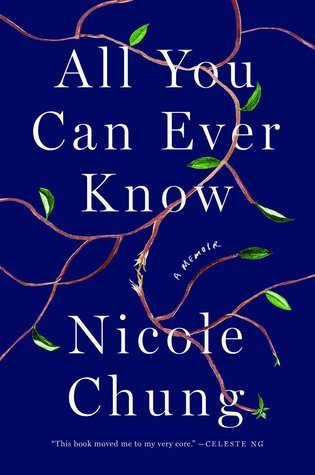
In All You Can Ever Know, Nicole Chung takes us on her journey of searching for her birth family. Like many of us, she was told that her birth parents made the ultimate sacrifice in hopes that she would have a better life. Her memoir begins when she is adopted into a Catholic family in Oregon, where she grows up as the only Korean in a white community. As her parents’ chosen gift from God, she keeps the prejudice she experiences a secret, afraid of betraying the sunny narrative of her adoption that she had been lead to believe.
As she prepares to become a mother herself, she sets out on a search for her roots—unearthing painful family secrets in the process. Unlike other transracial adoptees, she was born on American soil and her birth parents lived on the West Coast, only hours away from her childhood home. In her memoir, she takes us through her search process and the difficulties in reconciling her childhood ideations of her birth parents to the realities of finding them.
Content warning: mention of blood
During finals season in my freshman year of university, an anti-abortion organization stormed my campus with graphic pictures of bloody “fetuses” and “aborted babies” placed next to coins for a size comparison. A student collective that I participated in decided to put together a counter-protest. People held up signs warning pedestrians of “triggering content ahead,” and other signs supporting reproductive rights. As an adoptee, my opinion on peoples’ right to choose pregnancy when it is right for them often baffles anti-abortion crusaders. That day, I brandished a sign that said “I am adopted and pro-choice.”
While I had very civil conversations with people that day on our differing opinions, some people were not as kind.
Out on my college courtyard, a handful a white teenagers from the organization—years later, I can only remember a girl with head of beautiful, blonde curls—circled me. A friend of mine sensed trouble, and swooped in to try and save me, “Do you need to get out of here?” As I looked into their face, a voice from behind them said, “I just have one question I want to ask you.” I don’t remember giving the blond-haired girl an affirmative glance, but she continued regardless:
“Would you have rather been aborted than adopted?”
Years later, this memory accosts me every time I talk about my adoption. Aside from being an impossible question to answer, the interaction stands out as evidence that adoptees are often stripped of their right to be critical of their adoption.
Often, outspoken critical perspectives on adoption take a backseat to the idealist vision of adoption, which on paper is a brilliant idea: to take a child without parents and place them in a loving home. It’s true that we gain so much from our adoptions, more than just a new family, often we are afforded a new set of life opportunities. On the surface, everyone wins—the birth parents can imagine a better life for their child, a family who often is unable to have kids of their own can now be happy parents, and the child can live in a nurturing environment.
However, there are many issues that can complicate this picture perfect story. The Sixties Scoop, for example, was the forced adoption and assimilation of Native youth into white families. The Guardian wrote an article as recently as June 2021 that forced adoptions are still a regular occurrence in the UK. For transracial adoptees, we are hardly given the space to grieve for cultures lost, identities taken away. To mourn would be selfish, dissatisfied with the sacrifice of both our birth parents and adopted parents. In some cases, we are adopted into homes that are unprepared to deal with the complexities of raising a child of color.
In All You Can Ever Know, Nicole pushes back against mainstream ideas of adoption, challenging the lack of authority adoptees are given over their own narratives:
“In most published stories, adoptees still aren’t the adults, the ones with power or agency or desires that matter—we’re the babies in the orphanage; we’re the kids who don’t quite fit in; we are struggling souls our adoptive families fought for, objects of hope, symbols of tantalizing potential and parental magnanimity and wishes fulfilled. We are wanted, found, or saved, but never grown, never entirely our own.”
As a minority within a minority, there are lots of overlap in experiences between Asian Americans and Asian American adoptees. In our childhoods, it is not uncommon to experience racism and prejudice while straddling our dual identities as Asian Americans, never quite feeling “American enough” or “Asian enough.” In her memoir, Nicole speaks about kids on the playground who were cruel to her for being Asian. For adoptees who grew up in white households, we often feel like there is little difference between our upbringings and those of our white peers. We didn’t have any cultural context for the racism we experienced as children, making it difficult to seek out proper support systems.
Nicole expertly captures insecurities that many adoptees have, from the burden of being “the good adoptee,” to the internalized trauma of feeling unwanted by our birth families. I read this with a pen in hand, liberally underlining the passages that made me feel understood. I hope that All You Can Ever Know is the first of many adoptee memoirs—it’s about time we start taking control of our own narratives.
Adoption Resources
nakasec.org
adopteesforjustice.org
Adoptee Citizenship Act 2021
Shameless Plug for the Divided Families Podcast ♡
Writing a Transracial Adoption Story for an Audience with Nicole Chung
Living Deportation with Adam Crapser (Korean American adoptee, interviewed by me!)
Korean Adoptees and the Side by Side Project with Glenn Morey
Coming Out of the Fog: Transracial International Adoptees on Abolition
Centering Adoptees in National Adoption Month (this one also features me talking about adoption)
 Only Naengmyeon
Leave a comment