This year’s Proclamation of National Adoption Month begins, “Children are the kite strings that hold our Nation’s ambitions aloft, and every one of them deserves to grow up in a safe and loving home.” That was this year’s trite introduction—likely written by a Biden staffer—to the laundry list of legislation the Biden Administration has enacted to make adoption easier for families in the U.S.
All of this politicized rhetoric of children carrying the ambition of our nation is absolutely shameful when juxtaposed with the ongoing genocide in Palestine.
Doomscrolling has become a daily temptation as it has become increasingly irresponsible to turn a blind eye to Gaza. Last week, I watched Irish Member of the European Parliament, Clare Daly’s speech on the devastating numbers: “A Palestinian child slaughtered every ten minutes for a month.” The UN is calling it a children’s graveyard (Reuters). I will never claim to be an expert on the history of Israel’s occupation of Palestine, lest James Marriott of The Times banishes me to the realm of manic self-expression for sharing my views on Gaza. However, as Western sympathies are reaching capacity and National Adoption Month is still in full swing, I am urged to keep up momentum however possible.
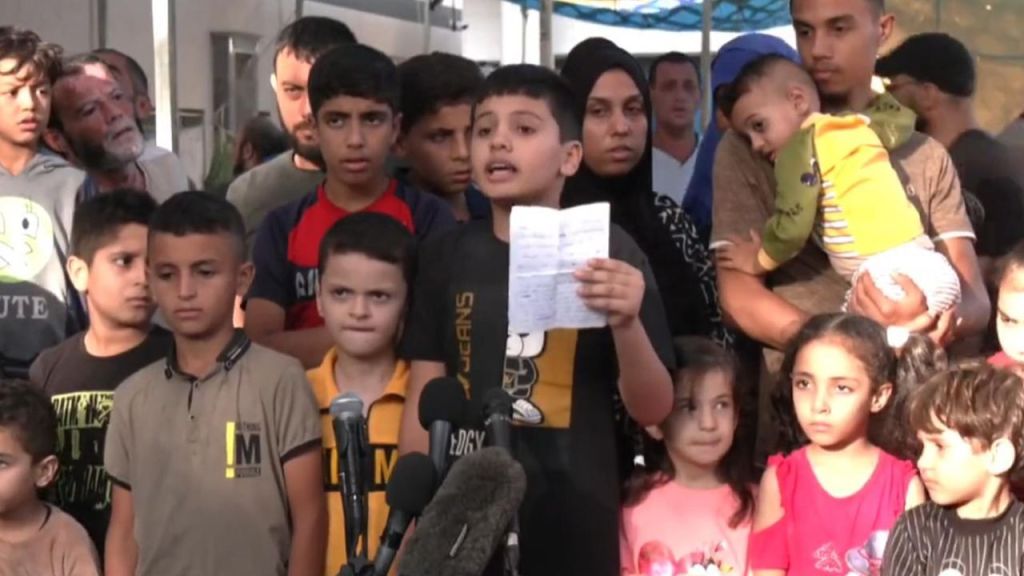
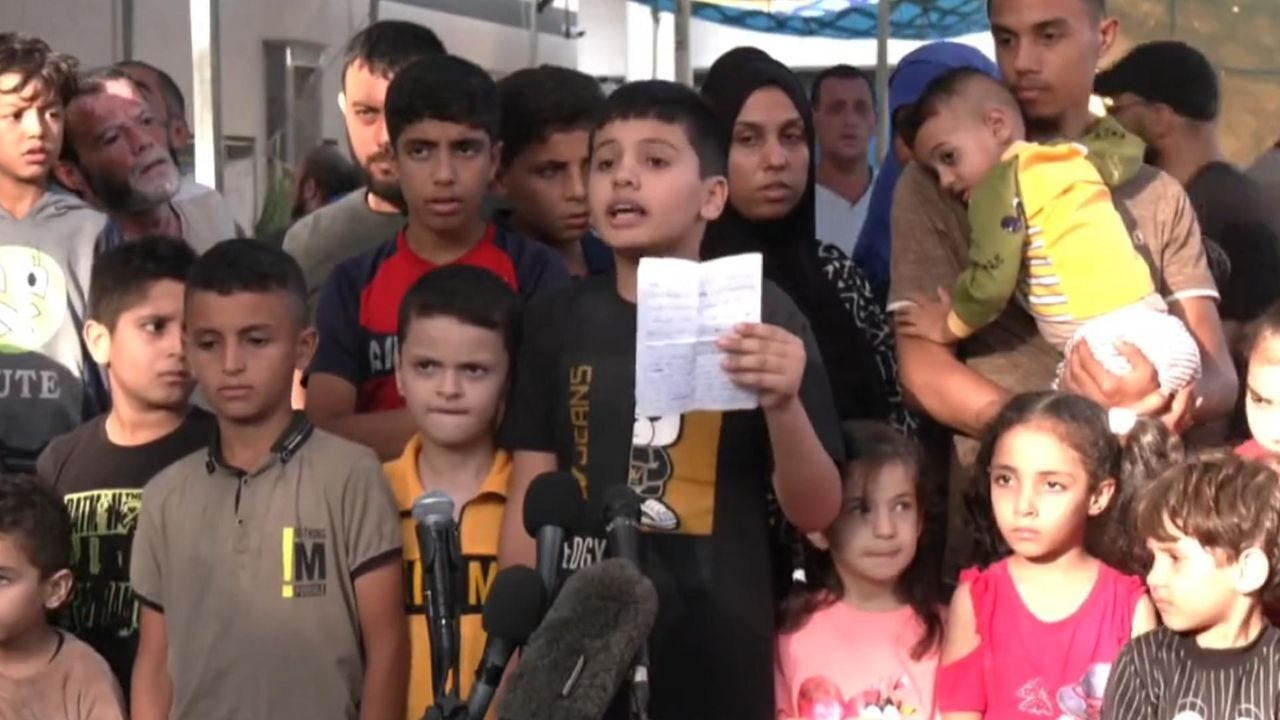
If at the beginning of this month, you also saw the press conference held by children in Gaza (Sky News) pleading for peace, perhaps you have also noticed how children are central to media portrayals of genocide.
Many news outlets draw sympathy from foreign audiences by foregrounding the number of children and women killed in Gaza. However, we should also remember how Arab men are continually dehumanized and take time to recognize their suffering as well. Of course, murdering women and children is key to ethnic cleansing, and the number of children’s casualties hits harder when we remember that half of the population of Gaza is under 18 years old (NPR). We have seen parents and children write their names on their bodies so they are easier to identify if killed in airstrikes (Business Insider). Their only hope is to not be lost and forgotten. As a teacher, nothing delighted me more than my students’ hopes for their futures—whether they had practical dreams like becoming a civil service officer or more ambitious dreams like becoming the Emperor of Space. Did you also see the video in the New York Times of young children in Gaza sharing their dreams with the world? With hands inked by felt-tip pens, the children of Gaza must first defend their own humanity before they can carry the ambition of a nation.
Protecting families—their traditional structure with gender roles, generational aspirations, etc.—is sacred to nation-building projects in the modern world. Sociologist Ieva Zake suggests that “family is treated as an ultimate embodiment of the nation, its values, behavior and its need for intergenerational transmission of the national heritage.” On one hand, the heteronormative nuclear family unit is a powerful nationalist exercise of bio-power in the literal production of the national subject. On the other hand, families are not just a reflection of nationalist sentimentality. Chosen families, for example, can exist as a space for queering relationships traditionally rooted in capitalism. In the case of oppressed peoples, the family unit can call upon a panoply of emotions, ranging from protection to survival to resistance. Having worked with the Divided Families Podcast for years, I have witnessed firsthand how family separation has driven geopolitics in the past few decades: from the North-South Korea border, the US-Mexico border, the Cold War, the Vietnam War, international adoption, and so on. Even if we don’t have the smoothest relationships with our families, many of us would quake at the thought of never seeing them again. This is the reality for people in Gaza right now.
I’ve started writing this piece quite a few times but never knew how to coherently collect my thoughts on politicizing children. In the past month, I have been hyper-aware of how children have become both victims and statistical sympathy tools in this genocide. Frankly, it’s horrible. Rund Abdelfatah of NPR’s Throughline writes for The Atlantic, “However you look at it, the children of Gaza are trapped—in a world built long before they arrived and convulsed by forces out of their control—and robbed of their fundamental humanity.”
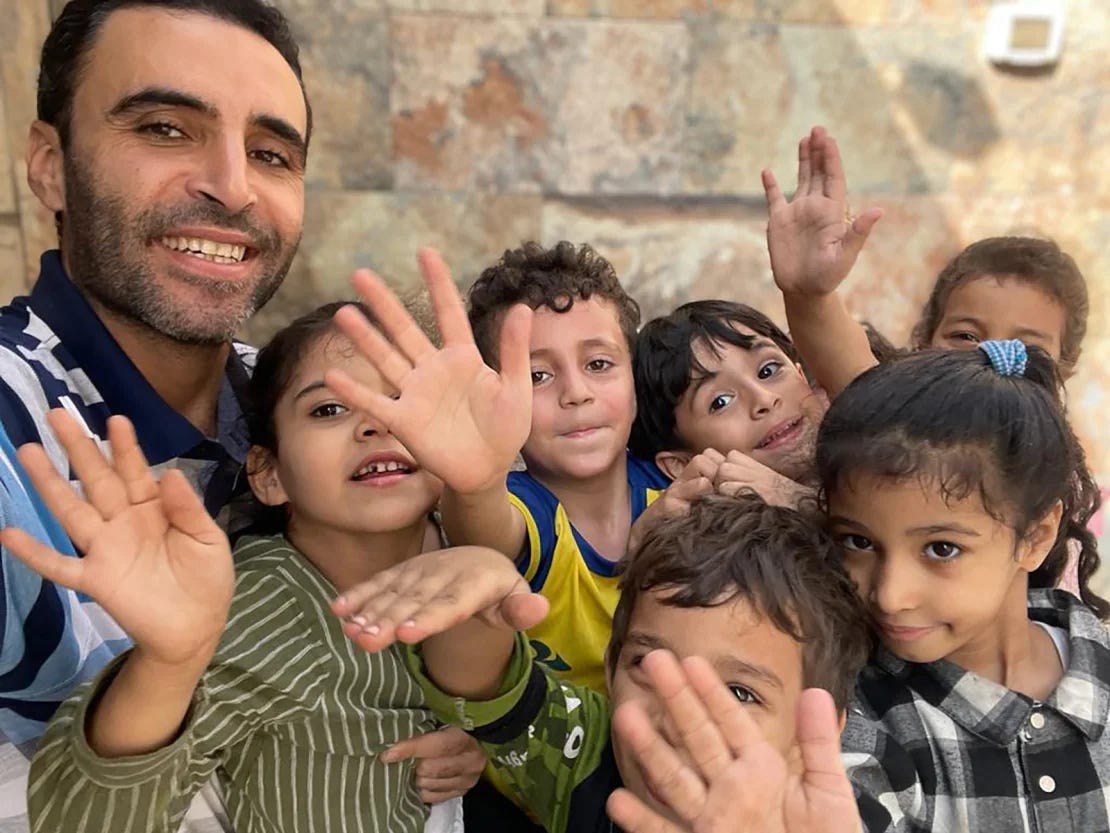
I believe that people can easily recognize that humanitarian crises create orphans. In an article on CNN, Hazem Saeed Al-Naizi, the director of an orphanage in Gaza City, reports that he was forced to evacuate forty people, including eight infants, when the Israel Defense Forces began air striking closer to Gaza City. It was apparent in Operation Babylift and during the 2010 Haiti Earthquake. (Also read/check citations from International Adoption as Humanitarian Aid: The Discursive and Material Production of the “Social Orphan” in Haitian Disaster Relief.) It is perhaps harder for people to remember this fact when they celebrate adoption. Even in my late twenties, I feel defined by my relationship to my adopted parents, resulting in this never-ending state of being the “adopted child.” Besides creating orphans, we have seen how murdering children has become a punishment for journalists covering Gaza. (see: Al Jazeera journalist, Wael Al-Dahdouh, learns his entire family has been killed while on-air, CNN. Mahmoud, Dahdouh’s 15-year-old son, also wanted to be a reporter like his father.) There is no comparison to be made between my struggle as an adoptee and the struggle for Palestinian liberation apart from the postcolonial consciousness necessary to recognize how politicizing children for the nation is ethically dubious. As an adoptee, I stand in solidarity with Gaza, its people, and its children.
When I think about the children in Gaza, I think about how this ongoing genocide will stay with them for the rest of their lives. Hopefully, they’ll be alive to see an end to it. Hopefully, they will be able to heal from the rest of the world turning their backs as their families were taken from them. Again, Biden reminds us that children embody ambition for a brighter future. Free from nationhood, the children of Gaza have dreams for their own futures—to be doctors, teachers, and engineers to rebuild their bombed homes. More than just a ceasefire, critical resources such as water, food, and survival supplies must be allowed into Gaza to end this second stage of genocide. Right now, it is our responsibility to hear the children’s pleas “to live as other children live.” Al-Naizi, the orphanage director, laments, “We really suffer a lot and feel great terror. We try to do our humanitarian duty towards these children, who have no fault except that they were born in Gaza.”
Gaza resources:
 Only Naengmyeon
Leave a comment